

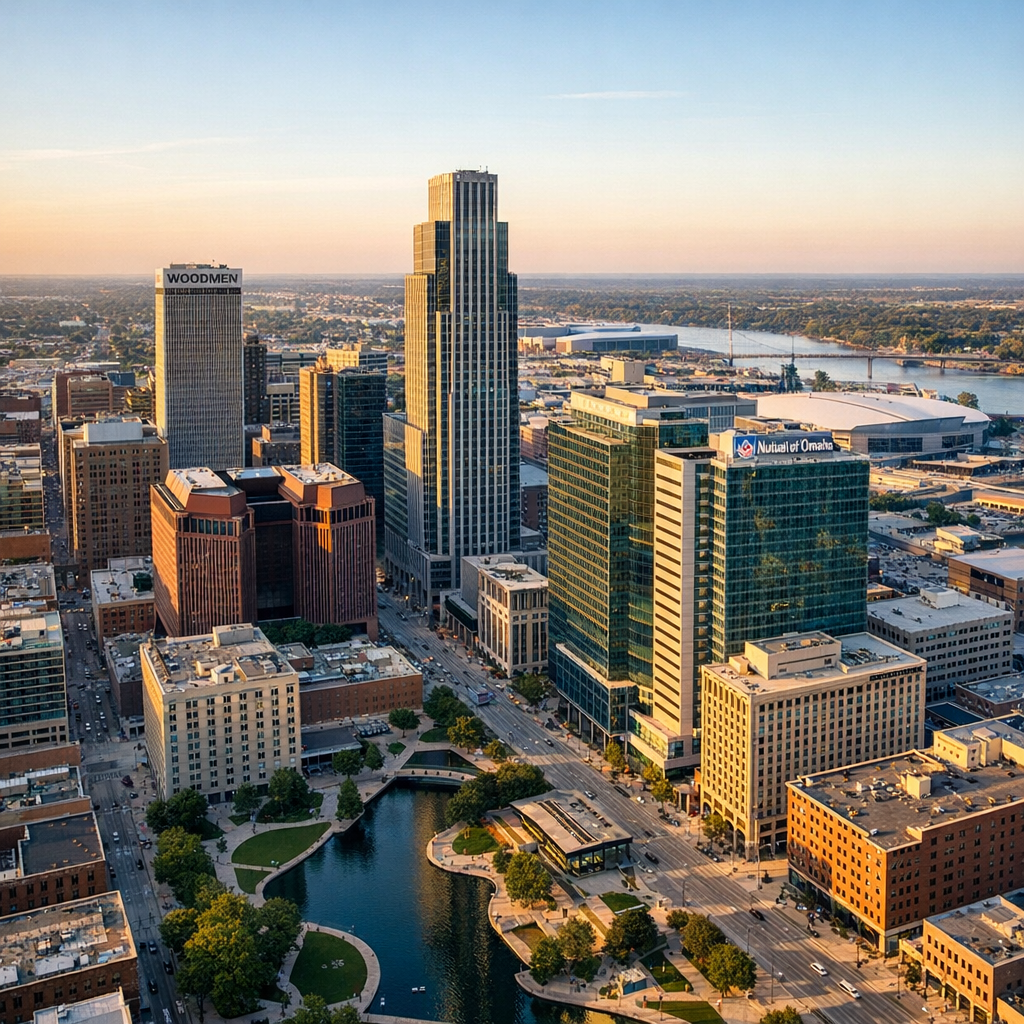
Omaha, Nebraska, has long been recognized for its economic stability and resilience. However, recent analyses indicate that while the city maintains a strong foundation, it faces challenges in keeping pace with peer metropolitan areas across the nation.
Economic Performance in Perspective
According to a 2025 report by the Greater Omaha Chamber of Commerce, Omaha ranked 18th out of 23 peer metros in terms of economic performance. This ranking is based on 50 data points across nine key economic categories, highlighting areas where Omaha lags behind its counterparts. Notably, the city has experienced slower job creation and population growth compared to similar regions.
Industry Strengths and Challenges
The finance and insurance sectors have been pivotal to Omaha’s economic growth. In 2022, these industries accounted for 22% of Douglas County’s gross domestic product, significantly outperforming national averages. This growth is attributed to the city’s deep-rooted financial institutions and their proactive adaptation during the COVID-19 pandemic.
However, despite these strengths, Omaha faces challenges in retaining talent and attracting new residents. The city has been experiencing a ‘brain drain,’ with a notable outflow of skilled workers to other states. This trend has contributed to slower employment and wage growth, impacting the overall economic vitality of the region.
Strategic Initiatives and Investments
In response to these challenges, local leaders have initiated several strategic plans. The Omaha City Council adopted a comprehensive Poverty Elimination Action Plan (PEAP) in 2025, crafted by faculty at the University of Nebraska at Omaha. This plan aims to address systemic gaps in housing, transportation, education, health, and employment, positioning Omaha to tackle poverty with targeted, data-backed strategies.
Additionally, the state has made significant investments to stimulate economic recovery. In January 2024, Governor Jim Pillen announced over $234 million in economic recovery grants for North and South Omaha. These funds are intended to support placemaking infrastructure, entrepreneurship, workforce development, and other critical areas, aiming to create over 9,250 jobs in the next five years.
Looking Ahead
While Omaha’s economic landscape presents both strengths and challenges, the city’s proactive initiatives and strategic investments demonstrate a commitment to fostering growth and resilience. By addressing talent retention, enhancing industry competitiveness, and investing in community development, Omaha aims to navigate the complexities of the national economic environment and secure a prosperous future for its residents.