

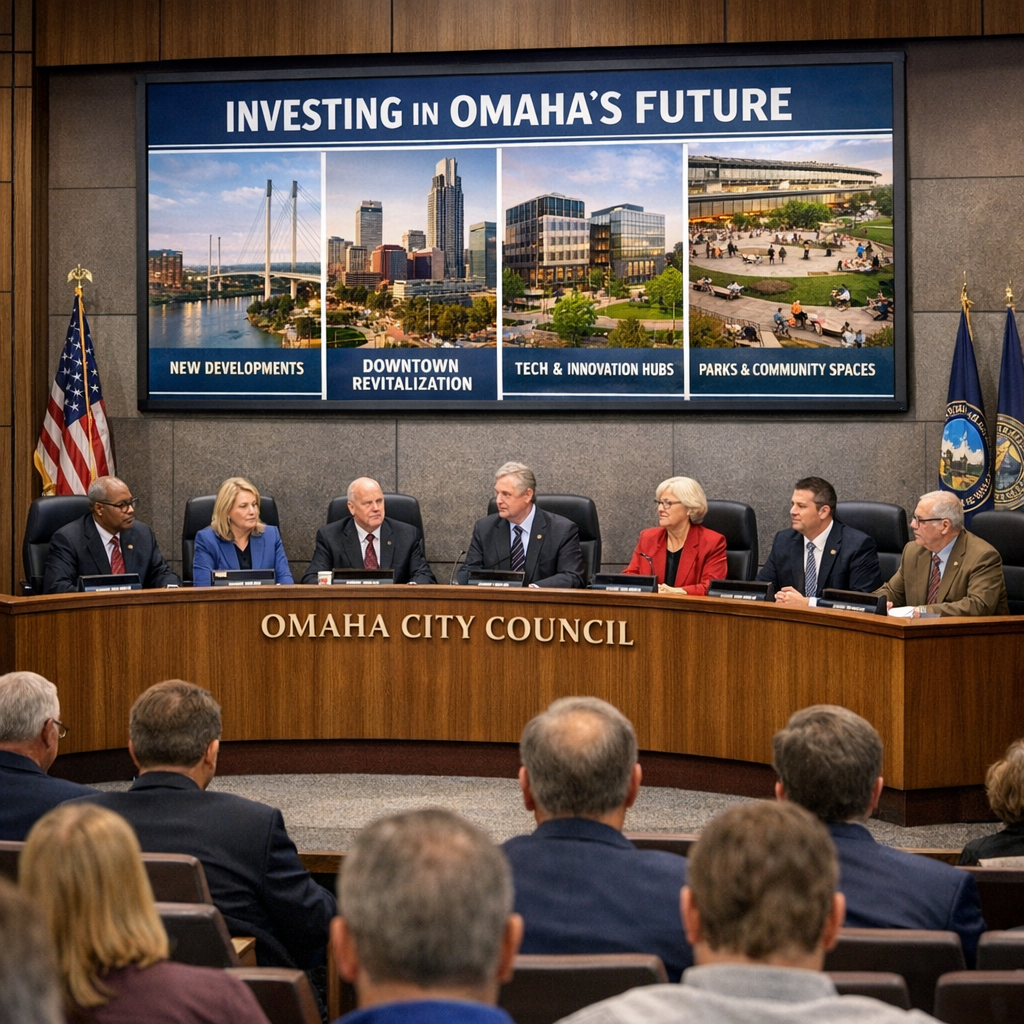
Hello Omaha—this is Ava Thompson with updates straight from City Hall. The City Council has been busy lately, making decisions that will shape where and how we live.
New TIF Policy Aims to Promote Affordable Housing
This council session, a landmark resolution passed by a 5–2 vote establishes a set of policies for Tax Increment Financing (TIF) projects to better support affordable housing. Under these new guidelines, developers using TIF funds will need to:
- Collect data on existing housing—including past rents and number of bedrooms—for project sites.
- If a development displaces residential units, it must build equivalent or more units in kind, or pay into the city’s Affordable Housing Development Fund.
- Submit annual rent rolls if their project includes rentals, ensuring tracking and accountability.
These changes are intended to balance the need for development with long-standing community calls for housing that remains accessible—especially to lower- and middle-income residents. It builds on earlier debates on how TIF should be leveraged and makes a clearer path toward equity for neighborhoods that have been underrepresented.
Public Safety and Infrastructure Bonds on the Horizon
The city has also sponsored bond proposals to address growing needs in public safety and parks and recreation. Key among them:
- A multimillion-dollar bond that would fund a new combined facility for police and fire services, designed to meet growing demand in cross-jurisdictional emergency response.
- A parks bond aimed at better preserving green space and updating worn park facilities, ensuring open areas remain accessible and well-maintained.
These bonds will go before voters soon. City leaders say they’re necessary to keep pace with Omaha’s growth and patch up infrastructural wear, while critics caution the long-term debt and prioritization of spending must be carefully weighed.
Traffic Safety and Citizen Voices Have Their Moment
As part of the budget discussions, residents spoke passionately in public hearings. Key concerns included the sizable portion of city funds devoted to policing—nearly 40% of the general fund according to one speaker—and a perceived underinvestment in transit, bike infrastructure, and ADA-compliant roads.
One especially alarming statistic emerged during a back-to-school traffic safety campaign: over the last decade, Ames Avenue alone accounted for more than 100 deaths or serious injuries. That prompted renewed calls among councilmembers for more traffic calming measures, safer crossings near schools, and pedestrian-first planning.
What to Watch Going Forward
Next steps include:
- Voter approval of the proposed bonds.
- Official adoption and implementation of the new TIF policies in upcoming development projects.
- Ongoing pressure from residents for better transit, safer streets, and more balanced budget priorities.
These topics—housing affordability, public safety, and infrastructure investment—are central to Omaha’s future. Since these discussions are ongoing, your voice matters: get involved in public hearings, attend council meetings, and keep holding leaders accountable for how they choose to invest our city’s resources.