

By Emma Johnson
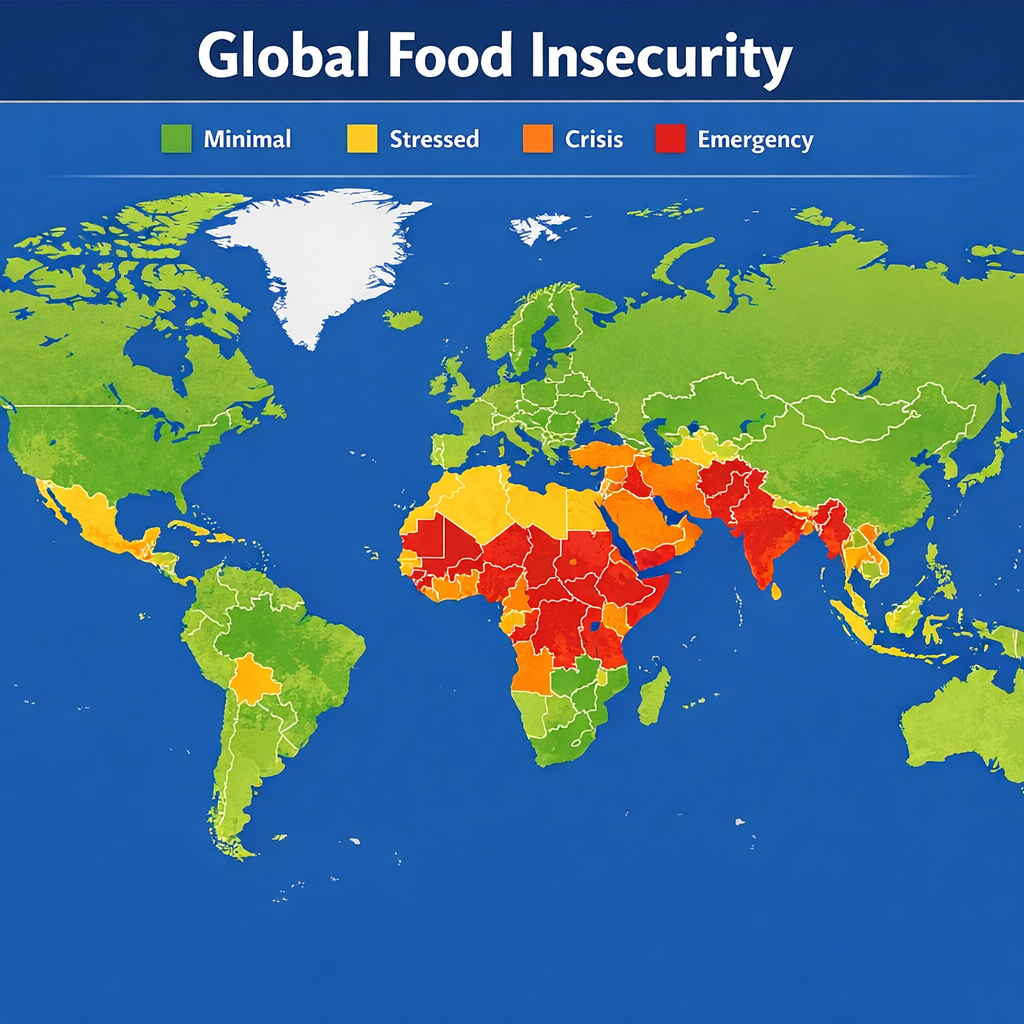
A number of global reports paint a grim but sobering picture: despite incremental improvements, the world remains far from resolving mounting food insecurity, fueled largely by conflict, climate change, and economic pressures.
The State of Global Food Security
The UN’s latest study shows that hunger affected about 7.8% of the world’s population in 2025, while more than 2.1 billion people are experiencing moderate or severe food insecurity. The catch? These numbers reveal only modest gains and highlight sharp gaps—especially in parts of Africa where two-thirds of people cannot afford a healthy diet. Women, children, and rural communities are among the hardest hit.
Conflict Deepens the Crisis
Armed conflict is now the primary driver of acute hunger. The World Food Programme reports that around 266 million people in food-crisis countries faced crisis levels of hunger in 2026. Wars in places like Sudan, South Sudan, and the Gaza Strip have already produced confirmed famines, with the risk of more looming if fighting continues unchecked.
Economic Shocks and Climate Risks
Rising costs of fertilizers and energy, supply chain disruptions, and climate volatility—especially potential El Niño conditions—are guiding the trajectory of food prices upward. Projections warn of further strain on already vulnerable communities. In addition, many of the countries most at risk are seeing data gaps that make it harder to anticipate crises and mount timely responses.
What Must Be Done
- Scale up funding and access—aid organizations say shortfalls and access obstacles are leaving many in urgent need without help.
- Strengthen food systems—this means improving resilience in agriculture, investing in local production, and removing trade barriers where feasible.
- Address affordability—getting nutritious food within reach for the billions who can’t currently afford it is critical.
- Improve monitoring—better data is essential to enable early warning and tailored responses, especially in fragile or conflict-affected areas.
As the world works toward the goal of zero hunger by 2030, it’s clear that progress is fragile. Ending conflict, tackling economic shocks, and responding effectively to climate risks will be essential to change the trajectory.